
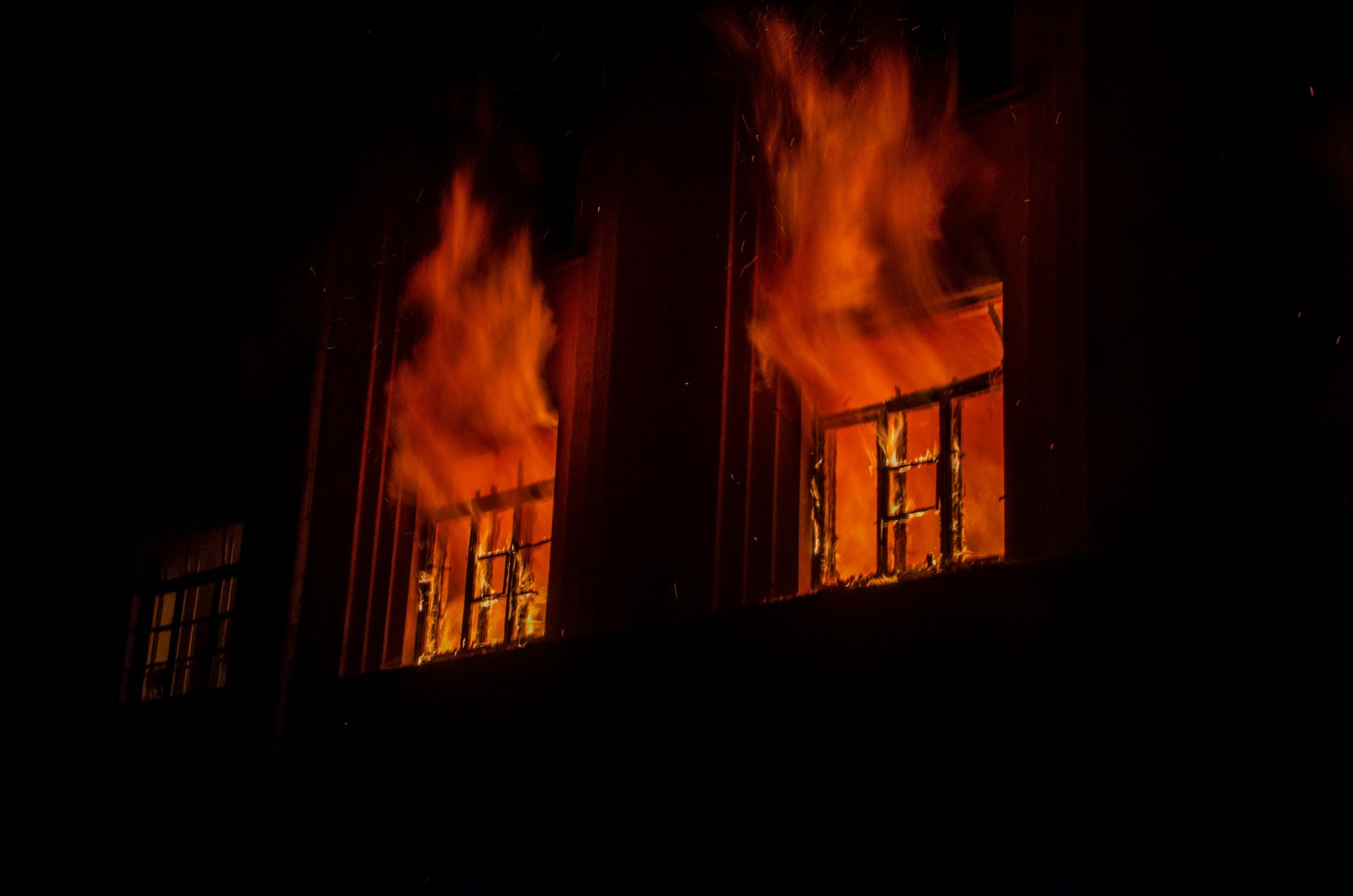
Overlooked Fire Hazards in Residential Buildings
The Silent Side of Residential Fire Risk in South Africa
Fire safety in residential buildings is often treated like a background system. Something assumed to be “handled” as long as walls are up, switches work, and alarms are installed. Yet across South African homes, from compact urban flats in Johannesburg to sprawling suburban properties and dense rental units, fire risk rarely comes from dramatic, obvious failures. It builds quietly in corners, behind appliances, inside overloaded plugs, and within storage habits that seem harmless until they are not.
The reality is that most residential fires are preventable. Not with expensive systems or complex engineering, but with awareness of the small, overlooked details that accumulate over time. Electrical strain, improper storage, and inconsistent maintenance form a trio of risk factors that often go unnoticed until ignition occurs.
South African building standards, including frameworks like SANS 10400-T for fire protection, provide a strong regulatory baseline. Yet compliance alone does not guarantee day-to-day safety. Maintenance behaviour inside the home plays a far more immediate role.
This article explores the most frequently overlooked fire hazards in residential buildings, with a specific focus on electrical and storage-related risks. More importantly, it translates those risks into practical prevention habits that homeowners, landlords, and maintenance teams can apply immediately.
Electrical Systems: The Hidden Pressure Points Behind Walls
Electrical systems in residential buildings are like nervous systems. They distribute power silently, consistently, and usually without complaint. But unlike biological systems, they do not self-correct when overloaded or damaged.
One of the most common fire hazards in South African homes is electrical overloading. This often happens when modern appliance demand exceeds the capacity of older wiring systems. Many residential properties, especially those built before high-density appliance usage became normal, were not designed for today’s energy loads. Air fryers, heaters, microwaves, entertainment systems, and charging devices all compete for the same circuits.
Loose connections inside distribution boards or wall sockets introduce another layer of risk. These faults are rarely visible. A plug that feels slightly warm or a breaker that trips occasionally is often ignored, yet these are early warning signs of heat buildup.
A particularly dangerous scenario arises when informal electrical extensions are used. Multi-plug adapters chained into each other create resistance points that generate heat. In dry environments or near combustible materials, this can escalate rapidly.
The issue is not only technical. It is behavioural. Homes evolve faster than their electrical infrastructure, and maintenance rarely keeps pace.
Wiring Degradation and the Age Factor in Homes
Electrical wiring does not last forever. Insulation degrades, copper fatigues, and connections loosen over time. In many South African residential properties, especially older housing stock in established suburbs, wiring systems may be decades old.
This ageing process is often invisible. Walls conceal most of the system, leaving homeowners unaware of gradual deterioration. Heat cycles from daily use slowly break down insulation, while minor surges from the grid place stress on circuits.
In some cases, DIY modifications worsen the situation. Additional sockets installed without proper load calculations or uncertified extensions in garages and outside rooms introduce unpredictable load paths.
The danger lies in inconsistency. One section of a home may be upgraded while another remains outdated, creating imbalance in electrical distribution. This unevenness increases the likelihood of localised overheating.
Maintenance inspections are often reactive rather than preventative. The system is checked only when something fails, rather than as part of a scheduled safety cycle.
Storage Practices: The Quiet Fuel Load Inside Homes
While electrical faults are a leading ignition source, what burns is often determined by storage habits. Many residential fires escalate not because of ignition itself, but because of what is nearby when ignition occurs.
Garages are among the most overlooked high-risk zones in residential buildings. They frequently serve as mixed-use storage spaces containing flammable liquids, paint thinners, old furniture, cardboard boxes, and seasonal clutter. These materials significantly increase fire load density.
Storerooms and spare bedrooms often follow a similar pattern. Over time, unused items accumulate, forming dense clusters of combustible material. Cardboard, textiles, plastics, and wooden furniture act as accelerants once ignition begins.
A particularly common issue in South African homes is the storage of cleaning chemicals and fuels near heat sources. Even small exposure to heat can increase vapour release in certain substances, raising ignition risk.
What makes storage risk so dangerous is its passivity. Unlike electrical systems, there are no warning signs. The hazard remains dormant until an external trigger appears.
Kitchen and Appliance Zones: Everyday Ignition Hotspots
Kitchens remain one of the most active ignition environments in residential buildings. Cooking appliances generate open heat, and when combined with poor ventilation or cluttered surfaces, conditions become unstable.
Grease buildup on stoves and extractor fans is a subtle but significant hazard. Over time, grease becomes highly flammable. A small flare-up during cooking can ignite residue that spreads fire rapidly across surfaces.
Portable appliances such as kettles, toasters, and microwaves contribute to electrical load concentration in a single zone. When multiple devices operate simultaneously on shared circuits, overheating becomes more likely.
Extension cords in kitchens are particularly risky. They are often used to compensate for limited socket availability, but they are not designed for continuous high-load operation.
The kitchen is also where behavioural distraction plays a major role. Human attention shifts frequently during cooking, and small oversights such as leaving items too close to heat sources often go unnoticed.
Heating Devices and Seasonal Fire Escalation
South African winters bring a predictable spike in residential fire incidents. The cause is often heating devices that are used intensively and sometimes incorrectly.
Electric heaters placed too close to curtains, bedding, or upholstered furniture create high-risk zones. Many heaters rely on radiant heat, which can gradually raise the temperature of nearby materials until ignition occurs.
Faulty or low-quality heating devices amplify the problem. Devices without proper thermal cut-offs or safety certifications are especially hazardous in residential environments.
Portable gas heaters introduce additional risks. Poor ventilation can lead to incomplete combustion, while proximity to flammable materials increases ignition potential.
A recurring pattern in residential maintenance is seasonal neglect. Heating devices are stored for most of the year and then used heavily without inspection at the start of winter. This lack of pre-use checks allows hidden faults to persist.
Garages, Workshops, and Hybrid Spaces
Modern residential properties increasingly use garages and outbuildings as hybrid functional spaces. They become workshops, storage areas, and sometimes informal living spaces.
This blending of functions introduces conflicting safety requirements. A space used for mechanical work may contain fuel, oil, and solvents alongside electrical tools and extension wiring.
Poor ventilation in these areas increases risk further. Vapours from chemicals can accumulate, especially in enclosed garages with limited airflow.
Lighting and electrical modifications are often added informally in these spaces. Exposed wiring, overloaded sockets, and non-standard installations are common findings in residential maintenance inspections.
The issue is not the use of space itself, but the absence of structured safety planning for multi-purpose environments.
Human Behaviour: The Most Unpredictable Risk Factor
While systems and materials form the physical basis of fire risk, human behaviour determines when and how those risks activate.
Small habits accumulate. Leaving chargers plugged in continuously, ignoring flickering lights, storing items “temporarily” near heat sources, or postponing minor repairs all contribute to long-term risk buildup.
In many homes, awareness of fire safety exists in theory but not in daily routine. Smoke alarms may be installed but not tested. Electrical warnings may be noticed but not acted upon.
Risk perception is often skewed by familiarity. Because homes feel safe, hazards are mentally downgraded. This creates blind spots in maintenance behaviour.
Changing this does not require technical expertise. It requires consistency in observation and response.
Prevention Checklist Thinking: Turning Awareness into Action
Fire prevention in residential buildings is most effective when treated as a continuous maintenance mindset rather than a once-off inspection.
Instead of relying on emergency response, prevention depends on identifying and correcting small issues early.
Electrical systems should be treated as living infrastructure. Any sign of heat, smell, flicker, or irregular tripping should be investigated immediately. Distribution boards should be accessible and not obstructed, allowing for regular visual inspection.
Storage areas should be periodically decluttered, not just organised. The goal is not aesthetic order but reduction of combustible density. Items that are unused, unknown, or forgotten should be removed rather than stored indefinitely.
Appliance zones such as kitchens and living rooms should remain functionally clear. Heat sources require physical breathing space, both above and around them.
Heating devices should be inspected before seasonal use, with particular attention to cords, switches, and thermal protection systems.
Maintenance routines should be scheduled rather than reactive. Even simple quarterly checks can significantly reduce cumulative risk.
Electrical Load Awareness in Modern Homes
The evolution of household technology has quietly increased electrical demand across South African residential buildings. Homes now operate multiple high-consumption devices simultaneously, often without corresponding upgrades to infrastructure.
Understanding load distribution is essential. Circuits have limits, and exceeding them repeatedly creates thermal stress. While circuit breakers are designed to trip, relying on them as a primary safety mechanism is not ideal.
One of the most overlooked issues is “phantom load stacking”, where multiple devices draw small amounts of power continuously. Individually harmless, collectively significant.
Smart devices, routers, entertainment systems, and chargers contribute to this background load. Over time, this increases baseline heat within electrical systems.
Proper spacing of appliances across circuits reduces strain. Where uncertainty exists, professional assessment remains the safest approach.
Storage Density and Fire Spread Dynamics
Fire safety is not only about ignition prevention but also about controlling spread potential. Storage density plays a critical role in how quickly a fire escalates.
A lightly furnished room allows heat dissipation and slower fire progression. A densely packed storage room accelerates flame spread, reduces oxygen flow control, and increases radiant heat feedback loops.
Materials matter as much as quantity. Synthetic fabrics, plastics, and treated wood burn differently from natural materials, often producing higher heat output and toxic smoke.
In residential maintenance, reducing storage density is one of the simplest yet most effective safety interventions available.
The Role of Routine Maintenance in Fire Prevention
Routine maintenance is often associated with aesthetics or functionality, but its role in fire prevention is far more significant.
Loose sockets, worn insulation, blocked ventilation, and cluttered storage are all maintenance issues before they become fire hazards.
In South African residential contexts, where housing stock varies widely in age and construction type, maintenance consistency is especially important.
Even small interventions such as replacing damaged cords, cleaning appliance zones, and checking plug temperatures contribute to systemic safety improvement.
Maintenance is not an event. It is a rhythm.
Designing Safer Homes Through Awareness
Residential fire hazards rarely emerge from single catastrophic failures. They emerge from accumulation. Electrical strain builds slowly. Storage becomes denser over time. Maintenance becomes delayed, then forgotten.
The most effective safety strategy is awareness paired with consistency. Not perfection, but attentiveness.
South African homes are diverse in design, age, and use, but the underlying principles remain constant. Electricity must be respected as a dynamic system. Storage must be managed as potential fuel. Behaviour must be guided by small, repeated checks rather than assumptions.
Fire prevention is not about fear. It is about reducing uncertainty in the places where people live, rest, and gather.
A safer home is not one that avoids risk entirely, but one that refuses to ignore it.