
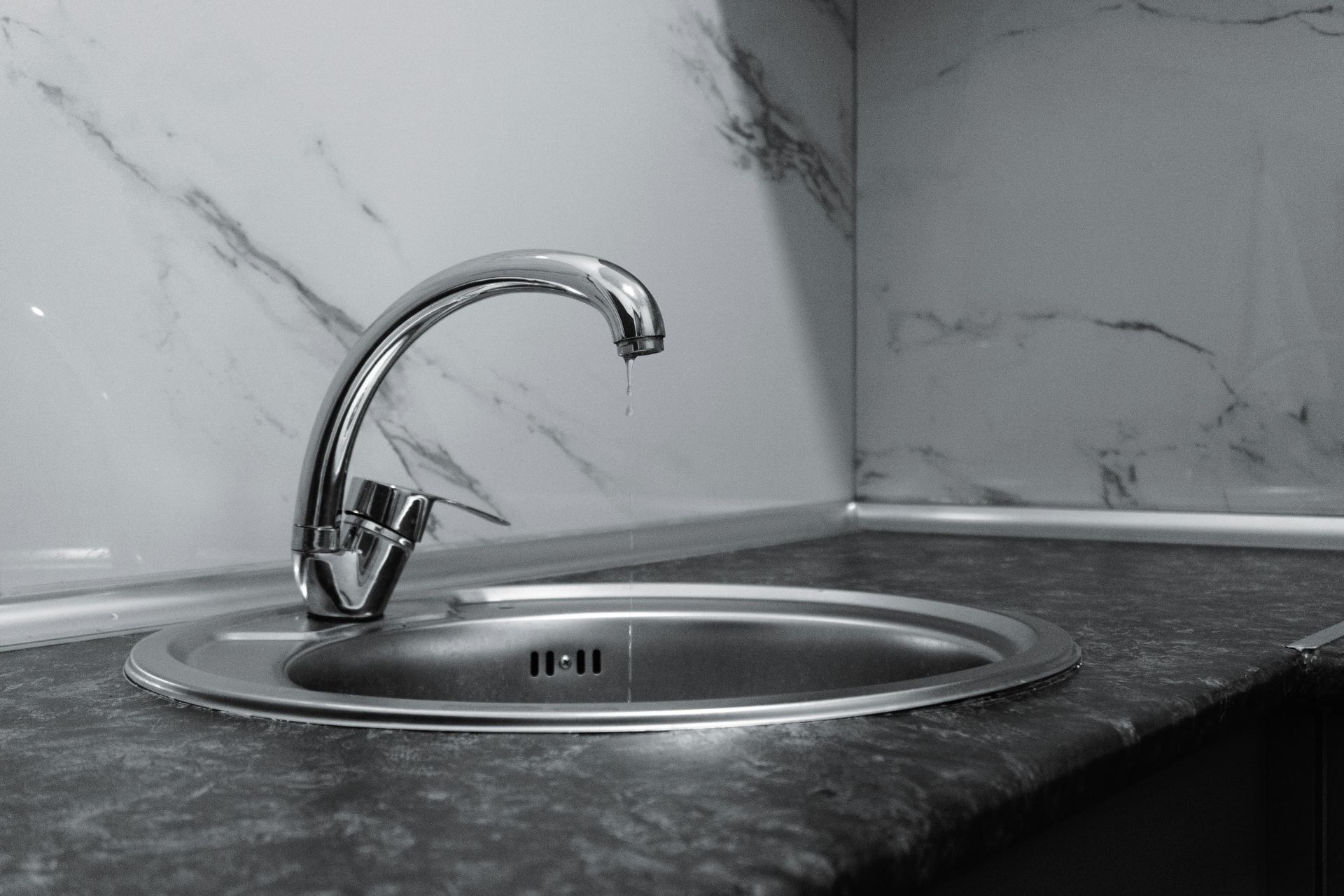
Why Plumbing Fails in SA New Developments
Why Plumbing Systems Fail in New Developments in South Africa
New housing developments in South Africa often arrive with polished finishes, fresh paint, and the promise of modern infrastructure. Yet beneath the surface, plumbing systems frequently become the first point of failure. Not because plumbing is inherently fragile, but because the quality of installation varies widely from one site to another.
The gap between design intent and on-site execution is where most problems are born. Materials may meet specification on paper, but workmanship, supervision, and procurement pressures often determine whether a system survives its first year or begins quietly leaking into the structure.
This article explores why plumbing systems fail in new developments, with a focus on materials and workmanship as the two most decisive factors shaping long-term performance.
The Hidden Weak Link in New Construction
Plumbing is one of the most tightly packed systems in a modern building. Water supply, drainage, venting, and hot-water systems all compete for space behind walls and under slabs. In theory, standards and compliance frameworks should ensure consistency. In practice, execution is uneven.
Even newly completed homes can contain defects that remain invisible until pressure, usage, or time exposes them. Research and field observations in South Africa consistently highlight that plumbing components and installation practices are not always fully compliant with required standards, contributing to leakage, premature failure, and system inefficiency :contentReference[oaicite:0]{index=0}.
What makes this especially critical in new developments is the assumption of perfection. Buyers expect “brand new” to mean flawless. Plumbing, however, does not negotiate with assumptions. It responds only to physics, materials, and workmanship.
Materials: The First Point of Failure
At the core of many plumbing failures lies the material itself. Pipes, fittings, valves, and seals may appear identical, yet performance differences can be dramatic depending on quality and compliance.
In South Africa, investigations have shown significant levels of non-compliant plumbing components entering the construction market, with estimates suggesting that a large proportion of installed parts may not meet required standards :contentReference[oaicite:1]{index=1}. This does not always mean immediate failure, but it often shortens system lifespan and increases vulnerability to leaks, corrosion, and deformation.
Substandard materials typically fail in predictable ways:
Thin-walled pipes deform under pressure fluctuations, especially in hot-water systems. Low-grade fittings loosen over time, creating micro-leaks that slowly damage ceilings, floors, and foundations. Poor rubber seals harden prematurely, leading to joint failure at critical connections.
The danger is not always dramatic. A burst pipe is obvious. A slow leak behind a wall is not. It is the slow leak that does the greater long-term damage, often remaining undetected until structural materials begin to deteriorate.
Another material concern is compatibility. Mixing different metals or plastic systems without proper transition fittings can accelerate corrosion or weaken joints. On paper, each component may be “approved.” In practice, the combination can become unstable.
Workmanship: Where Good Materials Are Undone
Even the highest-quality materials cannot compensate for poor installation. Workmanship is the stage where plumbing systems either become reliable infrastructure or future liabilities.
In many new developments, plumbing work is completed under intense time pressure. Multiple subcontractors operate simultaneously, often with limited coordination between trades. Pipes are installed before full design verification, drainage falls are set quickly, and inspection windows are narrow.
One of the most common workmanship issues is incorrect pipe gradient. Drainage systems rely on precise slope to move waste effectively. Even slight deviations can lead to stagnation, blockages, or backflow issues. These defects often pass initial inspection because water may still flow during testing, but they fail under long-term use when system load increases.
Jointing quality is another critical factor. Poorly fused or sealed joints may not leak immediately. Instead, they weaken over time as water pressure cycles and building movement place stress on connections. These failures are often hidden until moisture appears in walls or flooring begins to lift.
Installation shortcuts are also common under schedule pressure. Pipe supports may be spaced too far apart, causing sagging over time. Access points for maintenance may be omitted or buried behind finished surfaces, making future repairs destructive and expensive.
The Construction Site Reality: Pressure, Speed, and Coordination Gaps
New developments operate within a tightly controlled economic and scheduling environment. Builders are under pressure to complete projects quickly, control costs, and coordinate multiple subcontractors on a single timeline.
Plumbing is often installed during an early structural phase, when other trades are still shaping the building envelope. This creates a fragile coordination environment where changes happen rapidly and documentation may lag behind execution.
In such conditions, even well-trained teams can introduce errors simply due to sequencing issues. A pipe installed correctly in isolation may become problematic once surrounding systems are added or modified.
This is where systemic failure begins. Not at the level of a single bad fitting, but at the level of fragmented construction sequencing.
Pressure Systems and Hidden Stress
Water systems in new developments are increasingly designed for efficiency, but they are also sensitive to pressure irregularities. Incorrect pressure regulation can accelerate wear on fixtures and joints.
When pressure is too high, fittings are stressed beyond design tolerance. When it fluctuates, joints experience repeated expansion and contraction cycles. Over time, this weakens seals and increases the likelihood of leaks.
Drainage systems face a similar issue. If venting is inadequate or poorly positioned, pressure imbalances can form within the pipe network. This can lead to gurgling sounds, slow drainage, and occasional backflow into fixtures.
These issues often appear months after occupation, reinforcing the illusion that the system was initially sound when in reality, it was simply not fully tested under realistic load conditions.
Compliance on Paper vs Performance in Reality
A major challenge in new developments is the gap between compliance inspection and real-world performance. A system may pass initial testing because water flows, joints hold temporarily, and no visible leaks are present.
However, compliance tests are snapshots in time. They do not always simulate long-term usage patterns, environmental stress, or gradual material degradation.
This is why some plumbing systems appear perfect at handover but begin to fail within months. The underlying weaknesses were present from installation; they were simply not yet exposed.
Inadequate enforcement and inconsistent material quality further widen this gap, making compliance a minimum threshold rather than a guarantee of durability.
The Role of Design Coordination
While materials and workmanship dominate failure patterns, design coordination also plays a subtle but important role. Plumbing systems intersect with structural, electrical, and waterproofing systems. A small design misalignment can cascade into installation compromises.
For example, insufficient allowance for pipe routing may force installers to reroute lines on site, introducing unnecessary bends or stress points. Similarly, late-stage design changes can result in rushed adjustments that are not fully tested before concealment.
In well-coordinated projects, plumbing design is integrated early and consistently updated. In less controlled environments, it becomes reactive, adapting to construction realities rather than guiding them.
Why New Does Not Always Mean Reliable
There is a persistent assumption that new construction equals reliability. In plumbing systems, this is not always true. New systems may actually be more vulnerable because they have not yet been stress-tested by time.
Older systems that have survived decades often did so because weak points were already revealed and repaired. New systems have not yet gone through that filtering process.
In this sense, failure in new developments is not always sudden. It is often the delayed expression of early-stage decisions about materials, installation practices, and coordination quality.
Preventing Failure Through Better Practice
Improving plumbing performance in new developments requires attention to both materials and workmanship simultaneously. Focusing on only one produces limited results.
Higher-quality materials must be matched with proper installation standards, supervision, and testing that reflects real-world usage conditions. Installation teams must be given sufficient time and coordination support to avoid rushed execution.
Equally important is accountability at the point of installation. Systems should be tested not only for immediate function but also for installation integrity under pressure, slope accuracy, and joint reliability.
Where Failures Truly Begin
Plumbing failures in new South African developments rarely originate from a single catastrophic mistake. They emerge from a chain of small compromises in materials, workmanship, and coordination.
Each compromise may seem minor in isolation. A slightly inferior fitting here, a rushed joint there, a missed gradient adjustment elsewhere. But together they form a system that looks complete while carrying hidden vulnerabilities.
Understanding this helps shift the conversation away from blame and toward precision. Plumbing systems do not fail because they are new. They fail because they are not consistently built to the same standard.
When materials and workmanship align, even complex systems can perform reliably for decades. When they do not, failure is not a possibility. It is only a matter of time.