
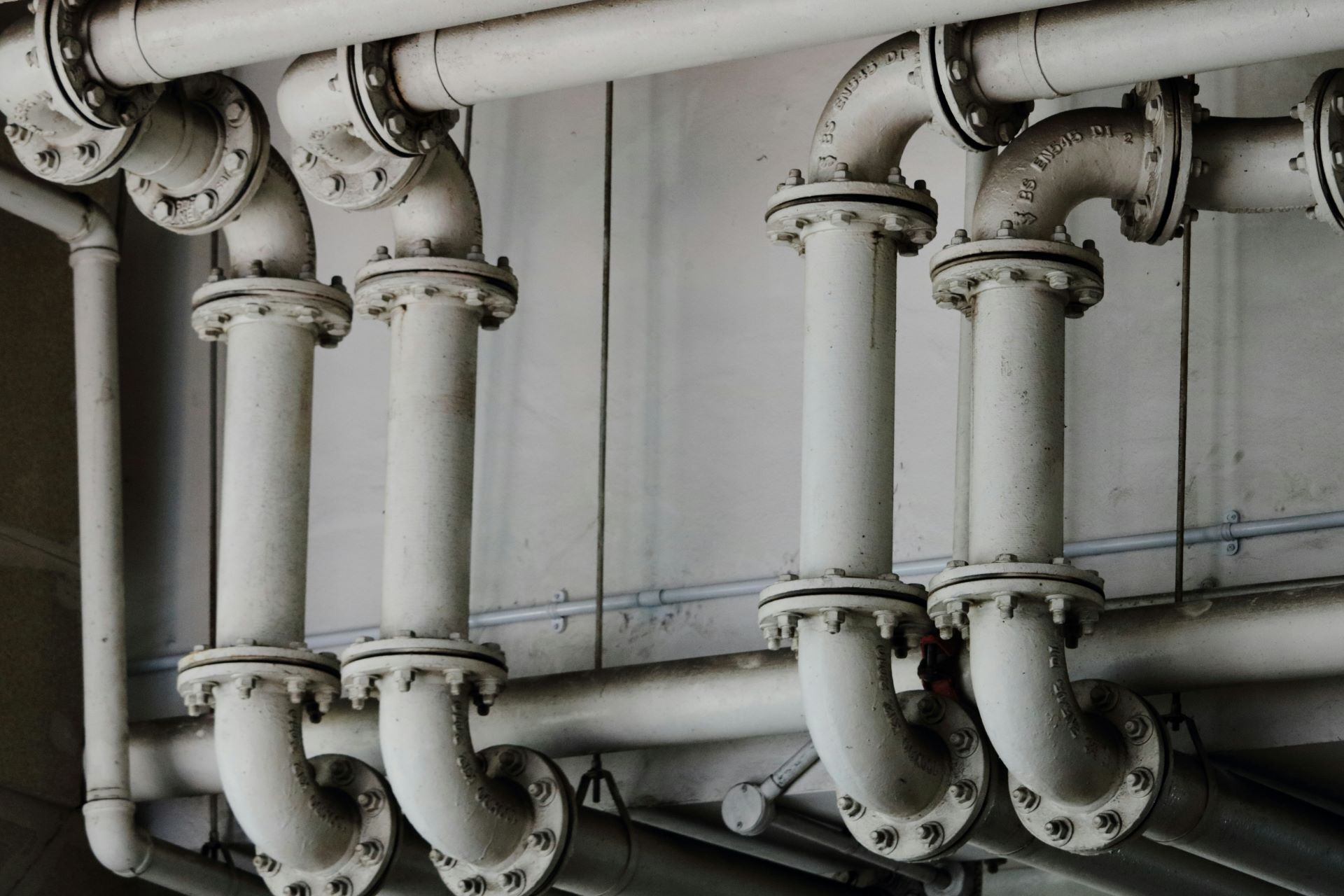
Why Plumbing Maintenance Saves More Than Renovations
The Silent Cost Beneath South African Floors
In South Africa’s built environment, plumbing is one of those invisible systems that only gets attention when something goes wrong. Pipes sit behind plastered walls, under tiled floors, and beneath concrete slabs, quietly doing their job until they don’t.
The trouble is that when plumbing fails, it rarely announces itself politely. A small leak does not stay small for long. It travels, spreads, saturates, and weakens. By the time a homeowner notices damp patches, bubbling paint, or a suspicious musty smell, the damage has often already migrated far beyond the original point of failure.
Across Johannesburg, Pretoria, Cape Town, Durban, and rapidly expanding peri-urban developments, property owners are discovering a costly truth: plumbing neglect is not a minor inconvenience. It is a slow structural expense that compounds silently over time.
Preventative plumbing maintenance is often dismissed as an optional expense. In reality, it is one of the most effective financial safeguards in construction and property management.
Hidden Leaks and the Anatomy of Destruction
A hidden leak is not dramatic. It does not burst walls open or flood rooms instantly in most cases. Instead, it behaves like a slow chemical reaction inside a building’s structure.
Water escaping from a pressurised pipe will always follow the path of least resistance. In South African residential and commercial buildings, that often means:
- Seeping into brickwork and mortar joints
- Saturating plaster layers behind paint
- Weakening adhesive bonds under tiles
- Eroding soil beneath foundations in extreme cases
What makes this especially dangerous is that modern finishes are designed to be visually clean and sealed. That aesthetic smoothness hides early warning signs until internal damage is significant.
In many older South African suburbs, especially where copper piping has aged or galvanised steel still exists in parts of the system, corrosion accelerates this process. Even newer developments using PVC and PEX are not immune, particularly where poor installation or water pressure fluctuations are involved.
The result is a hidden system failure that manifests late, and expensively.
Why Renovation Is the Wrong First Response
When damage becomes visible, the instinctive reaction is renovation. Replace the tiles. Repaint the wall. Fix the ceiling. It feels corrective, but it often ignores the root cause entirely.
Renovation treats symptoms. Maintenance treats systems.
In plumbing-related damage, renovation without diagnostic intervention is like repainting a leaking boat without patching the hole. The surface looks improved, but the underlying failure continues.
In South Africa, where construction costs have escalated significantly due to material inflation, energy costs, and labour pressures, this reactive approach becomes financially unsustainable very quickly.
A typical scenario looks like this:
A homeowner notices damp skirting boards. A contractor is called. The visible area is repaired and repainted. Six months later, the same issue returns, now expanded into adjacent walls.
At that point, the cost is no longer cosmetic. It becomes structural.
The True Cost of Reactive Plumbing Repairs
Reactive repairs are almost always more expensive than preventative maintenance, not just because of the plumbing fix itself, but because of collateral damage.
Once water infiltrates building materials, additional systems are affected:
- Electrical conduits may require inspection or replacement
- Flooring systems may need complete lifting
- Skirting, cabinetry, and built-in furniture can be compromised
- Mould remediation may become necessary in enclosed environments
In humid coastal regions like Durban and the Eastern Cape, moisture retention amplifies biological growth, introducing health risks alongside structural damage. In drier inland regions, the damage often manifests as material cracking, weakening plaster adhesion and accelerating decay cycles.
The cost escalation is rarely linear. It compounds.
A minor leak repair might be relatively affordable. A full restoration after prolonged undetected leakage can cost multiples of that initial intervention, especially when waterproofing and reconstruction are required.
Preventative Maintenance as Financial Infrastructure
Preventative plumbing maintenance should be viewed as part of a building’s financial infrastructure, not an optional service.
Just as vehicles require servicing to prevent engine failure, plumbing systems require inspection to maintain pressure stability, seal integrity, and flow efficiency.
In well-managed South African commercial properties, preventative maintenance programs typically include:
- Scheduled pressure testing of pipe systems
- Inspection of visible joints and connection points
- Early detection of corrosion or scaling
- Monitoring of water meter anomalies indicating hidden leaks
These interventions are not glamorous, but they are economically powerful. They extend the lifecycle of building systems and reduce the likelihood of catastrophic failures.
The difference in long-term cost between maintained and neglected plumbing systems is substantial, particularly in high-occupancy buildings such as apartment blocks, office parks, and retail centres.
South African Infrastructure Pressure Points
South Africa presents a unique set of challenges for plumbing systems due to municipal infrastructure variability.
Water pressure fluctuations are common in many regions. Intermittent supply, load shedding impacts on pumping systems, and ageing municipal pipelines all contribute to unstable pressure conditions.
These fluctuations place stress on internal plumbing networks. Joints loosen over time, seals degrade faster, and micro-fractures can develop in weaker materials.
In certain Johannesburg suburbs, for example, pressure surges during supply restoration after outages are known to accelerate pipe fatigue. In coastal cities, water salinity can contribute to corrosion in exposed metal fittings.
This means that even well-installed systems are operating under less-than-ideal conditions. Preventative maintenance is not just advisable in this context. It is essential.
How Small Leaks Become Structural Failures
The transformation from small leak to structural failure follows a predictable progression.
Initially, water escapes at a microscopic rate. This stage is invisible. Over time, surrounding materials absorb moisture. Porous building elements like plaster and brick begin to weaken.
Once saturation reaches a threshold, secondary effects appear. Paint begins to blister. Wooden elements expand and warp. Adhesives lose bonding strength.
Eventually, structural integrity is compromised in localised areas. At this point, repair is no longer targeted. It becomes reconstructive.
This progression is often accelerated in buildings with poor ventilation, a common issue in densely built urban South African environments where airflow is limited and internal humidity remains trapped.
Detection: The Quiet Advantage of Early Intervention
Modern plumbing maintenance is no longer purely reactive or visual. Detection technologies now allow for early identification of issues before visible damage occurs.
Thermal imaging, acoustic leak detection, and moisture sensors are increasingly used in both residential and commercial property maintenance.
However, even without advanced tools, early warning signs often exist:
- Unexplained increases in water bills
- Persistent damp odours in enclosed rooms
- Slight discolouration on walls or ceilings
- Warm spots on floors where hot water pipes run
The challenge is not availability of detection methods. It is awareness and willingness to act early.
Maintenance vs Renovation Economics
The financial comparison between maintenance and renovation is stark when examined over time.
Preventative maintenance spreads cost predictably over years. Renovation concentrates cost abruptly after failure.
In practical terms, maintenance functions like insurance for physical infrastructure. Renovation functions like emergency expenditure.
In South African property markets, where margins for landlords and developers are often under pressure from rising utility costs and rates, this distinction becomes critical.
A well-maintained property retains value more consistently. A neglected one experiences depreciation spikes tied to visible damage events.
The Role of Plumbing in Property Value Retention
Buyers and tenants increasingly evaluate properties not just on appearance, but on infrastructure reliability.
A freshly renovated interior can be misleading if underlying plumbing issues persist. Professional inspections often reveal whether a property has been maintained or merely cosmetically upgraded.
In competitive urban property markets like Johannesburg and Cape Town, hidden plumbing issues can significantly affect negotiation outcomes.
A property with a documented maintenance history commands more confidence and often achieves better long-term valuation stability.
Commercial Buildings and the Scaling of Risk
In commercial environments, plumbing failures scale in complexity and cost.
A leak in a residential home may affect one family. A leak in a commercial office block can disrupt multiple tenants, damage shared infrastructure, and trigger insurance claims across multiple stakeholders.
The cost of downtime alone can exceed physical repair costs.
For shopping centres, office parks, and industrial facilities, preventative plumbing maintenance is not just recommended. It is a core operational requirement.
Water Efficiency and the Hidden Sustainability Argument
Beyond cost, there is an environmental dimension to plumbing maintenance.
South Africa is a water-scarce country. Hidden leaks contribute significantly to unnecessary water loss, often unnoticed at household level.
A single undetected leak can waste thousands of litres over time. In aggregate, this places additional strain on municipal systems already facing demand pressures.
Preventative maintenance therefore supports both financial savings and broader resource sustainability.
The Psychology of Delayed Maintenance
One of the most consistent barriers to plumbing maintenance is psychological rather than technical.
Because plumbing systems are invisible, they are easy to forget. Out of sight becomes out of budget.
Homeowners and even property managers often prioritise visible upgrades like kitchens, paintwork, or landscaping because they offer immediate aesthetic gratification.
Plumbing maintenance offers no immediate visual reward. Its value is measured in problems that do not occur.
That absence of drama is precisely its strength.
Practical Maintenance Rhythm for South African Properties
While every building differs, a general maintenance rhythm improves system reliability significantly.
Rather than treating plumbing as a crisis response system, it should be integrated into routine property management cycles.
A simple approach includes periodic inspection, annual pressure testing, and proactive replacement of ageing fittings before failure occurs.
This is particularly important in older South African housing stock where systems may have been modified multiple times without full infrastructure upgrades.
The Long View: Why Maintenance Always Wins
Over time, the economics of plumbing maintenance become undeniable.
Renovations reset appearance. Maintenance preserves integrity.
One addresses what is visible. The other protects what is structural.
In South African construction and property environments where water damage is one of the most common and expensive forms of building deterioration, ignoring preventative plumbing care is essentially accepting avoidable risk as a standard operating cost.
The difference between a well-maintained building and a neglected one is rarely dramatic at first glance. It reveals itself slowly, through stability, consistency, and the absence of expensive surprises.
And in property management, silence is often the most profitable outcome of all.