
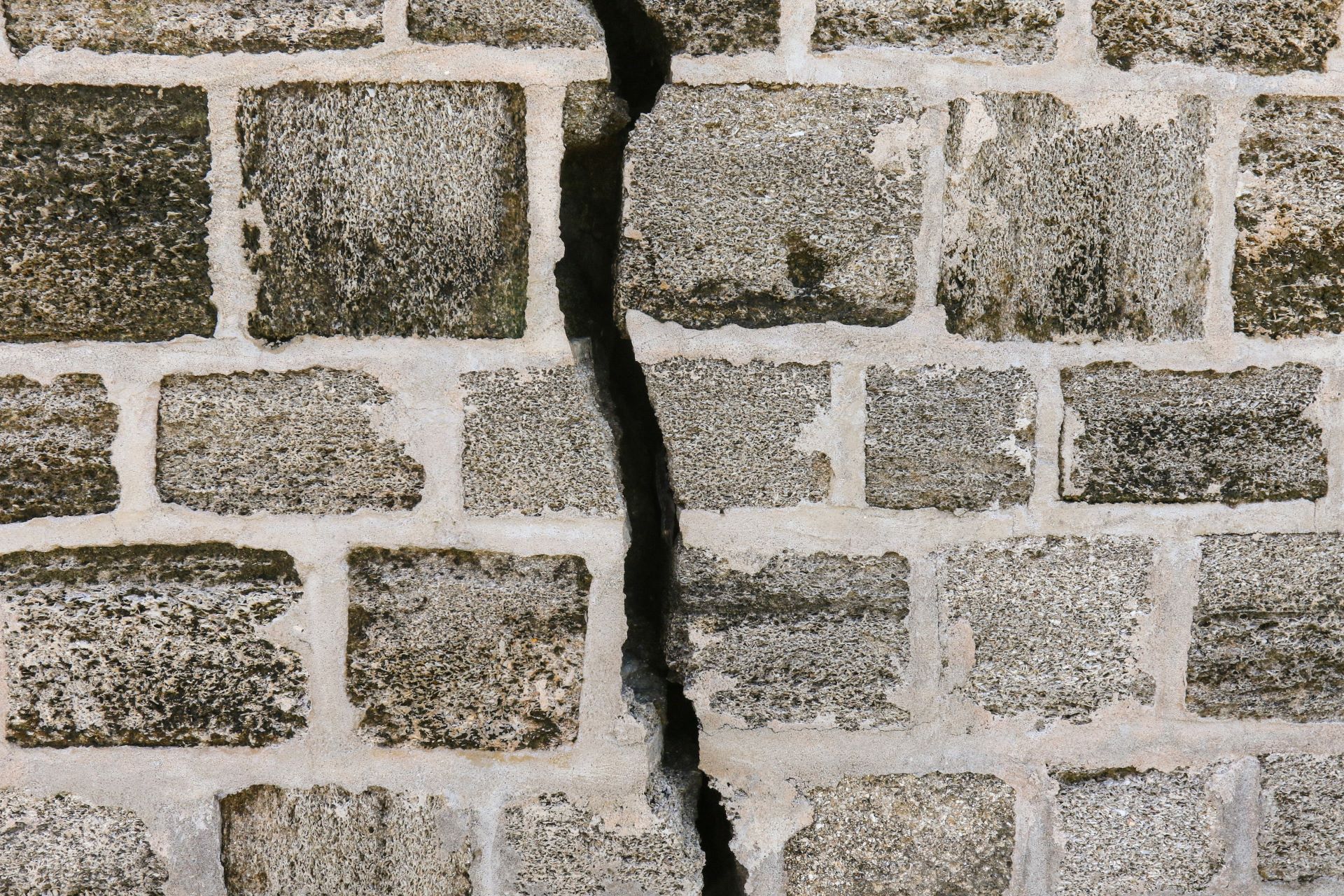
Why Structural Cracks Should Not Be Covered Early
Cracks Are Not Always the Real Problem
A crack in a wall has a strange ability to command attention. It slices across plaster like a lightning bolt frozen in time and instantly raises questions about safety, quality, and repair costs. In South Africa, where buildings face everything from expansive clay soils to intense seasonal temperature swings, cracks are one of the most common maintenance concerns property owners encounter.
The instinctive reaction is almost always the same. Cover it. Patch it. Paint over it. Make it disappear before visitors notice or tenants complain.
That reaction is understandable, but it can also create a much larger problem.
Structural cracks are often symptoms rather than defects themselves. Covering them too early may hide active movement that is still developing inside the structure. What appears to be a simple cosmetic issue can become a concealed structural failure that worsens quietly behind fresh plaster and paint.
Across residential developments, office parks, retail centres, schools, and industrial properties in South Africa, premature crack repair remains one of the most common maintenance mistakes. The issue is not necessarily the repair itself. The problem is timing.
Repairing a crack before understanding whether the building has stabilised can lead to repeated failures, escalating costs, and inaccurate assessments of structural health. In some cases, it can even delay critical intervention until the damage becomes severe enough to threaten safety.
Buildings move. They settle, expand, contract, flex, and respond to environmental conditions. The key challenge for maintenance professionals is determining whether a crack represents completed movement or ongoing movement.
That distinction changes everything.
Why Buildings Crack in South Africa
South African structures operate under environmental conditions that place considerable stress on building materials. Cracks can develop for many reasons, and not all of them indicate dangerous structural failure.
Some cracks are harmless cosmetic issues caused by plaster shrinkage or thermal expansion. Others signal foundation movement, water damage, or structural instability. Understanding the cause is essential before deciding on repairs.
One of the most significant contributors to cracking in South Africa is soil movement. Large parts of Gauteng, the Free State, North West, and sections of Limpopo contain expansive clay soils. These soils absorb moisture during rainy periods and shrink during dry conditions. That cycle causes continuous ground movement beneath foundations.
During prolonged droughts, foundations may settle unevenly as moisture evaporates from the soil. After heavy rains, the same soils can swell again. The building above experiences stress as different sections move at different rates.
This process often creates diagonal cracks near windows and doors, stepped cracks along brick mortar joints, or separation between walls and ceilings.
Coastal regions face different challenges. In Durban and other humid coastal cities, moisture penetration and salt exposure can weaken building materials over time. Corrosion inside reinforced concrete can create expansion pressure that eventually cracks the surrounding concrete cover.
Mining activity also contributes to movement in some regions. Old mine workings beneath urban areas can create gradual subsidence, especially around parts of Gauteng.
Temperature variation adds another layer of stress. South African buildings often experience significant daytime and nighttime temperature changes. Concrete, steel, brickwork, and plaster expand and contract at different rates. Without adequate movement joints, cracking becomes inevitable.
Poor construction practices can worsen these issues.
Common causes include:
• Inadequate foundation preparation
• Incorrect concrete curing
• Weak mortar mixes
• Missing expansion joints
• Poor drainage design
• Water leaks beneath slabs
• Inferior workmanship
• Uncontrolled structural loading
The result is a built environment where cracks are not unusual. The challenge lies in identifying which cracks require monitoring before repair.
The Difference Between Cosmetic and Structural Cracks
Not every crack indicates danger. Some are superficial and limited to finishes. Others affect the structural integrity of the building itself.
Cosmetic cracks typically occur in plaster, paint, or surface finishes. These cracks are often thin, shallow, and stable. They may result from drying shrinkage, slight thermal movement, or minor settlement that has already stopped.
Structural cracks are different.
They may extend through brickwork, concrete, or load-bearing components. They tend to be wider, deeper, and more likely to change over time.
Several warning signs suggest that a crack may be structural rather than cosmetic.
Diagonal cracking around openings is often associated with foundation movement. Horizontal cracks may indicate wall bowing or lateral pressure. Stepped cracks following mortar joints can suggest differential settlement. Cracks wider than a few millimetres deserve closer inspection, especially if they continue growing.
Movement is the key factor.
A repaired crack that reappears within weeks or months usually indicates unresolved movement beneath the surface. This is why early cosmetic repair can be misleading. The visible symptom disappears temporarily while the underlying cause remains active.
In many South African buildings, especially those built on reactive soils, movement can continue for months or even years after the first crack appears.
Repairing too early simply resets the clock.
Why Covering Cracks Too Early Creates Problems
The temptation to repair immediately is understandable. Property owners want buildings to look maintained and professional. Developers want units sold. Body corporates want complaints resolved. Facility managers want neat interiors.
Fresh plaster and paint provide the illusion of resolution.
But covering structural cracks before movement stabilises creates several serious risks.
The first issue is concealment.
Once a crack is filled and painted, it becomes harder to monitor. Maintenance teams lose the ability to observe whether the crack is growing, widening, or branching into adjacent areas. Important diagnostic evidence disappears beneath cosmetic finishes.
This is particularly dangerous in buildings experiencing active settlement.
A crack acts almost like a visual alarm system. It communicates stress patterns within the structure. Covering it too soon silences that warning mechanism before the underlying issue is understood.
The second problem is repeated repair failure.
When movement continues after cosmetic repairs, cracks almost always return. New plaster fractures. Paint splits. Sealants detach. The same area requires repeated maintenance cycles that waste money and labour.
Tenants and owners often interpret recurring cracks as poor workmanship, even when the repair failed because movement had not stopped.
The third issue is inaccurate structural assessment.
Engineers rely on crack patterns to evaluate structural behaviour. Covering cracks prematurely can obscure valuable information about load paths, foundation movement, or moisture-related deterioration.
By the time an engineer is called to inspect the building, the original evidence may already be hidden.
This can complicate diagnosis and delay appropriate intervention.
In commercial buildings, the consequences become even more serious. Hidden structural movement can affect waterproofing systems, glazing alignment, flooring, mechanical services, and fire-rated elements.
A small concealed crack may eventually reveal itself through far more expensive failures elsewhere in the building.
Active Movement Versus Historic Movement
One of the most important distinctions in crack assessment is determining whether movement is active or historic.
Historic movement refers to structural shifting that has already occurred and stabilised. The building experienced stress, cracked, and then reached equilibrium. Repairs performed after stabilisation are far more likely to remain intact long term.
Active movement means the structure is still shifting.
Repairing active cracks rarely succeeds because the forces causing the movement are still present. The structure simply continues moving until the repair material fails.
Determining whether movement is active requires observation over time.
This is where patience becomes an essential maintenance strategy.
In South Africa, seasonal changes can strongly influence building movement. A crack may widen during dry winter months and partially close during wetter summer periods. Without monitoring across seasons, maintenance teams may misinterpret the building's behaviour.
Active movement can result from:
• Ongoing foundation settlement
• Soil moisture changes
• Water ingress beneath foundations
• Structural overloading
• Vibrations from nearby activity
• Tree root influence
• Corrosion expansion
• Thermal cycling
• Retaining wall pressure
Historic movement may still require repair, but it generally indicates that the primary structural adjustment has already occurred.
The challenge is telling the difference.
How Crack Monitoring Works
Professional crack monitoring allows engineers and maintenance teams to track whether movement is continuing.
Instead of rushing into cosmetic repairs, the crack is observed systematically over time.
This process can be surprisingly simple in some cases.
Basic monitoring may involve measuring crack width periodically and recording changes. More advanced systems use crack gauges fixed across the crack to detect movement precisely.
These gauges can reveal whether the crack is widening, narrowing, shifting vertically, or remaining stable.
Photographic records also play an important role. Consistent images taken from the same angle under similar lighting conditions create a timeline of structural behaviour.
In larger commercial projects, digital monitoring systems may provide continuous data collection.
The monitoring period depends on the suspected cause of movement. In South Africa, engineers often prefer to observe cracks across multiple seasons to understand how environmental conditions affect the structure.
A crack that remains unchanged for several months may indicate stabilisation. A crack that steadily grows requires further investigation before repair.
Monitoring is not passive neglect.
It is an intentional diagnostic process designed to prevent incorrect repairs.
The Role of Water in Structural Cracking
Water is one of the most destructive forces affecting South African buildings.
Many structural cracks originate not from catastrophic structural failure, but from poor water management.
Leaking gutters, blocked stormwater systems, burst underground pipes, inadequate drainage slopes, and uncontrolled roof runoff can all alter soil moisture conditions beneath foundations.
When water accumulates near a structure, the soil expands. When the area dries later, the soil contracts again.
This movement cycle creates stress on foundations and walls.
In some cases, maintenance teams repair cracks repeatedly without addressing the moisture source driving the movement. The result becomes a frustrating and expensive loop of recurring damage.
Water ingress also weakens structural materials directly.
Moisture penetrating reinforced concrete can trigger steel corrosion. As the steel rusts, it expands and forces the surrounding concrete to crack and spall.
Similarly, persistent dampness can weaken mortar joints and contribute to masonry deterioration.
Monitoring cracks while simultaneously investigating moisture conditions is therefore essential.
A repaired crack without water management is often little more than decorative camouflage.
The Pressure Developers Face
New developments across South Africa frequently encounter settlement-related cracking during the early years after construction.
This is not necessarily unusual.
Buildings settle as loads transfer into the soil and materials undergo initial shrinkage and adjustment. Minor cracking can occur even in well-designed structures.
The problem emerges when developers feel pressured to hide defects quickly.
Prospective buyers react strongly to visible cracks. Cosmetic appearance affects sales, financing, and market perception. As a result, some developments undergo extensive patch-and-paint repairs before the building has fully stabilised.
This creates a cycle where repaired cracks repeatedly return during the defects liability period.
Owners become frustrated. Trust deteriorates. Disputes arise over workmanship quality and warranty responsibility.
In sectional title developments, the situation becomes even more complicated because responsibility for repairs may involve developers, contractors, body corporates, and insurers.
Premature cosmetic repair can unintentionally escalate conflict because the recurring cracks create the impression that repairs were poorly executed, even when the real issue was unresolved movement.
Long-term credibility often benefits more from transparent monitoring than from rushed concealment.
Crack Fillers Are Not Structural Solutions
A common misunderstanding in building maintenance is assuming that modern fillers or flexible sealants can permanently solve structural cracking.
No filler can stop structural movement.
Some products are designed to accommodate limited movement better than others. Flexible acrylics, polyurethane sealants, and elastomeric coatings can tolerate small amounts of expansion and contraction.
But these materials still have limits.
If the building continues moving significantly, the repair will eventually fail.
This distinction matters because marketing claims sometimes create unrealistic expectations. Property owners may believe that premium crack fillers eliminate the need for monitoring or structural investigation.
They do not.
Repair materials should match the structural condition of the building. Applying cosmetic products before understanding the movement pattern is like repainting a dashboard warning light instead of checking the engine.
The visible symptom disappears briefly while the underlying issue continues operating beneath the surface.
The Importance of Proper Diagnosis
Successful crack management begins with diagnosis rather than repair.
Before any cosmetic work begins, maintenance professionals should ask several key questions.
Where is the crack located?
What direction does it follow?
How wide is it?
Has it changed recently?
Does it continue through multiple materials?
Are doors or windows sticking nearby?
Is there evidence of moisture intrusion?
Has nearby excavation or construction occurred?
Are there drainage problems around the building?
Each answer contributes to understanding the building's behaviour.
Different crack patterns suggest different underlying causes.
Vertical cracks may indicate shrinkage or thermal movement. Diagonal cracks often relate to settlement. Horizontal cracks may suggest lateral pressure or structural stress. Random map cracking in concrete can point toward curing problems or surface shrinkage.
No single repair method suits every crack type.
This is why experienced structural assessment remains so important in South African maintenance practice. Quick cosmetic repair without diagnosis often addresses appearance rather than cause.
Why Monitoring Saves Money
At first glance, delaying repairs may appear irresponsible or inefficient.
In reality, monitoring often reduces long-term costs dramatically.
Repeated crack repairs are expensive. Labour, materials, scaffolding, repainting, tenant disruption, and administration costs accumulate quickly when repairs fail repeatedly.
Monitoring helps prevent this waste.
Once movement stabilises and the true cause is identified, repairs can be designed properly for the building's actual conditions.
This creates longer-lasting outcomes and reduces maintenance repetition.
Monitoring also helps prioritise structural intervention.
Some cracks require urgent engineering attention. Others simply require observation and routine maintenance planning. Without monitoring, maintenance budgets may be spent reacting emotionally rather than strategically.
In commercial environments, informed monitoring can prevent operational disruption.
Rather than repeatedly closing areas for cosmetic repairs, facility managers can schedule appropriate intervention at the right time with clearer understanding of risk.
The result is often lower lifecycle cost despite the slower initial response.
The Hidden Risk of Paint
Paint is surprisingly good at concealing structural warning signs.
After cracks are patched and repainted, subtle movement may continue unnoticed for extended periods. By the time the crack reappears visibly, the underlying structural condition may have worsened substantially.
In some cases, thick textured coatings delay visible crack reappearance even longer.
This creates a dangerous false sense of security.
Commercial buildings sometimes undergo extensive aesthetic refurbishment while structural movement remains unresolved beneath the surface layers.
Fresh finishes can make a deteriorating building appear healthy.
This is particularly risky in older South African buildings where waterproofing failure, reinforcement corrosion, or foundation movement may already be advanced.
A visually clean wall does not necessarily indicate structural stability.
South African Soil Conditions and Their Impact
South Africa contains highly varied geological conditions that strongly influence structural movement.
In Gauteng, expansive clay soils remain one of the biggest contributors to residential cracking. These soils respond aggressively to moisture fluctuations, particularly during drought cycles followed by heavy rainfall.
Poor site drainage magnifies the problem.
In Cape Town, seasonal moisture changes and hillside construction introduce different forms of settlement risk. Retaining wall pressure and slope instability may contribute to cracking patterns.
KwaZulu-Natal's humid climate increases moisture-related deterioration and corrosion concerns, especially in coastal structures exposed to salt-laden air.
The Karoo introduces another challenge altogether. Dry conditions can lead to severe soil shrinkage, while sudden storm events may create rapid expansion cycles.
This regional variation matters because crack behaviour is heavily influenced by local environmental conditions.
A repair strategy appropriate in Johannesburg may not suit Durban or Cape Town.
Monitoring allows maintenance professionals to understand how local conditions influence the specific building before final repairs are implemented.
The Human Psychology Behind Quick Repairs
There is also a psychological dimension to crack repair.
Visible damage creates anxiety.
People associate cracks with collapse, instability, and financial loss. Property owners therefore experience strong pressure to restore visual normality as quickly as possible.
Fresh paint provides emotional reassurance.
But buildings do not respond to emotional urgency.
Structural behaviour follows physics rather than aesthetics.
One of the most difficult aspects of professional maintenance management is explaining that immediate cosmetic repair may not be the correct solution. Clients often interpret delayed repair as inaction unless the monitoring process is explained clearly.
Education becomes essential.
When owners understand that monitoring protects them from repeated failures and hidden deterioration, they are more likely to support a measured approach.
Transparency builds confidence far more effectively than temporary concealment.
When Immediate Repair Is Necessary
Monitoring does not mean ignoring dangerous conditions.
Some cracks require urgent intervention.
Large structural cracks accompanied by visible displacement, sagging, bowing, or instability should be assessed immediately by qualified professionals.
Cracks associated with severe water ingress, structural deformation, foundation collapse, or reinforced concrete failure may indicate active risk.
Similarly, rapidly widening cracks deserve urgent attention.
Monitoring is appropriate when the building remains structurally safe while movement behaviour is being assessed. It is not an excuse to delay necessary engineering intervention.
The key is informed evaluation rather than automatic cosmetic response.
Best Practice for Managing Structural Cracks
Effective crack management follows a structured process rather than impulsive repair.
The first step is documentation. Record crack location, dimensions, orientation, and surrounding conditions.
The second step is investigation. Identify possible causes including moisture issues, drainage failures, soil movement, or structural loading changes.
The third step is monitoring. Observe whether movement continues over time.
Only after understanding the movement pattern should repair strategies be selected.
In many cases, the most effective long-term outcome involves addressing the underlying cause first.
That may include improving drainage, repairing leaks, stabilising foundations, adding movement joints, or correcting structural loading issues.
Cosmetic repair then becomes the final stage rather than the first response.
This sequence produces more durable results and reduces recurring maintenance costs.
Why Patience Is a Structural Strategy
Patience rarely feels satisfying in maintenance work.
Clients want visible action. Occupants want reassurance. Contractors want completion. Developers want handover. Everyone wants the crack gone immediately.
But buildings operate on longer timelines.
A structure settling through seasonal cycles cannot be rushed into stability simply because fresh plaster has been applied. Ignoring movement does not stop movement.
In many ways, premature cosmetic repair resembles placing a decorative rug over a leaking floor. The appearance improves temporarily while the underlying problem quietly continues.
Good maintenance practice requires resisting the urge for purely visual solutions.
Monitoring may appear less dramatic than immediate repair, but it often represents the more responsible and technically sound decision.
The Long-Term Value of Honest Maintenance
There is a broader lesson hidden within structural crack management.
Buildings age honestly.
They respond continuously to gravity, moisture, temperature, soil conditions, workmanship quality, and environmental stress. Cracks are part of that conversation between structure and environment.
Trying to silence that conversation too early can create greater problems later.
Honest maintenance acknowledges uncertainty when necessary. It recognises that observation and diagnosis are sometimes more valuable than rapid cosmetic intervention.
For South African property owners and maintenance professionals, this approach is especially important because environmental conditions place significant ongoing stress on structures.
Monitoring is not avoidance.
It is intelligence gathering.
A carefully observed crack reveals information about how the building behaves, where stress accumulates, and whether movement is stabilising or accelerating.
Once that information is understood, repairs become far more effective.
The crack is no longer treated as the problem itself, but as evidence pointing toward the real issue beneath the surface.
Conclusion
Structural cracks are among the most misunderstood issues in building maintenance. The visible damage naturally encourages fast cosmetic repair, yet appearance alone rarely tells the full story.
In South Africa's challenging environmental conditions, buildings experience continual movement from soil expansion, moisture fluctuation, thermal stress, settlement, and material ageing. Covering cracks too early may conceal active structural behaviour that still requires investigation.
Monitoring provides clarity.
It helps determine whether movement is ongoing or historic, whether the issue is cosmetic or structural, and whether deeper intervention is necessary before repairs begin.
The most effective maintenance strategies prioritise diagnosis before decoration.
A repaired wall may look reassuring for a few months, but a properly understood building performs better for decades. In the long run, patience, observation, and accurate assessment protect both the structure and the people responsible for maintaining it.
Fresh paint can hide a crack.
It cannot negotiate with physics.